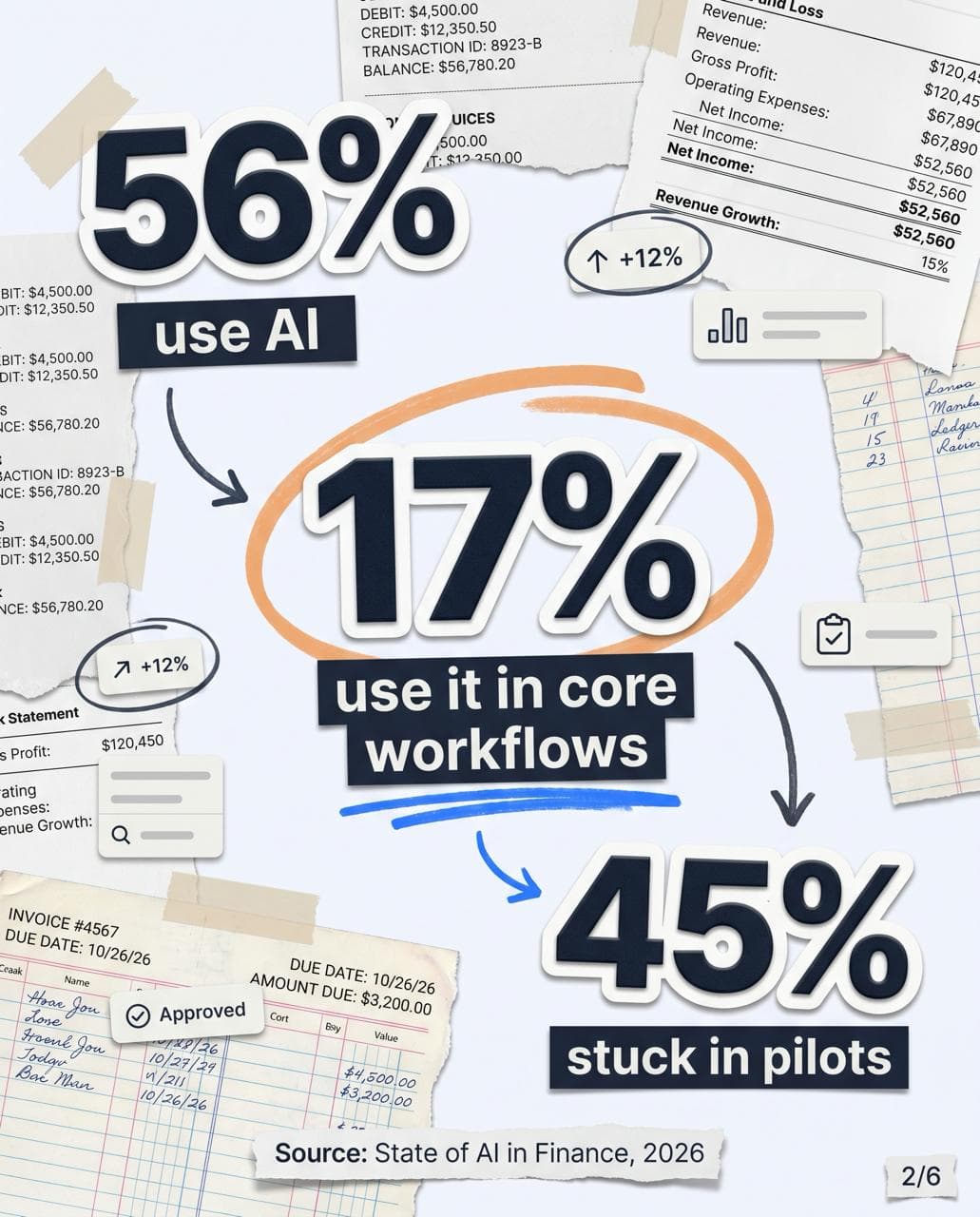
56% of finance teams say they've “adopted AI.” Only 17% use it where the actual work happens. That gap isn't a hype problem. It's a trust problem.
Why Adoption Stalls Before It Reaches the Real Work
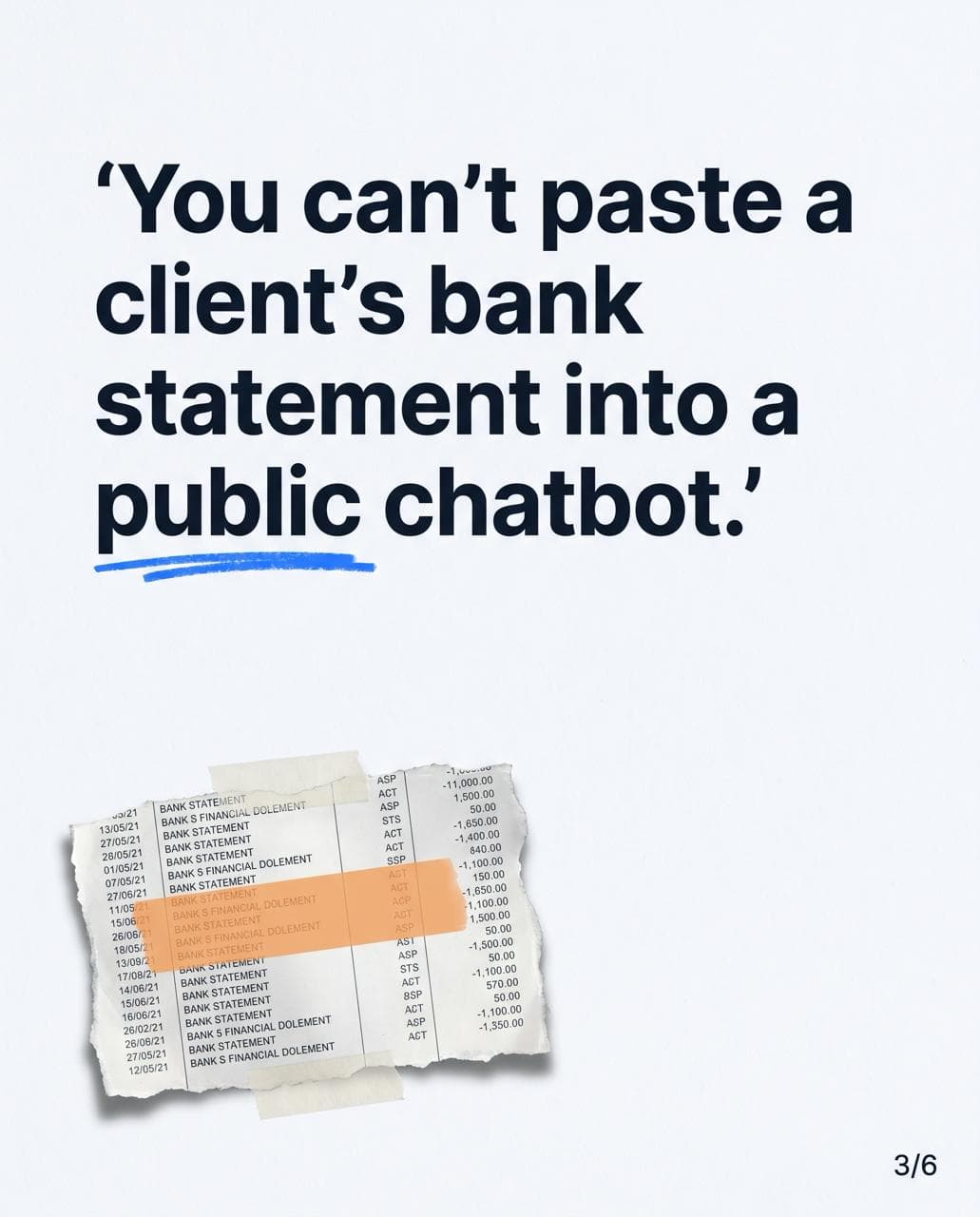
Most finance leaders aren't slow—they're careful, and for good reason. You can't paste a client's bank statement, a signed contract, or a live P&L into a public chatbot and hope for the best. The downside of getting that wrong is far larger than the upside of saving a few minutes, so teams hold back.
The result is that “AI adoption” stalls at the safe, low-stakes edges of the job: drafting emails, summarizing meeting notes, polishing a memo. It never reaches reconciliation, month-end close, or reporting—the workflows where the real hours actually live, and where the real savings would come from. So the adoption numbers look healthy on paper, while the workload on the team barely changes.
The Fix Isn't Another Chatbot
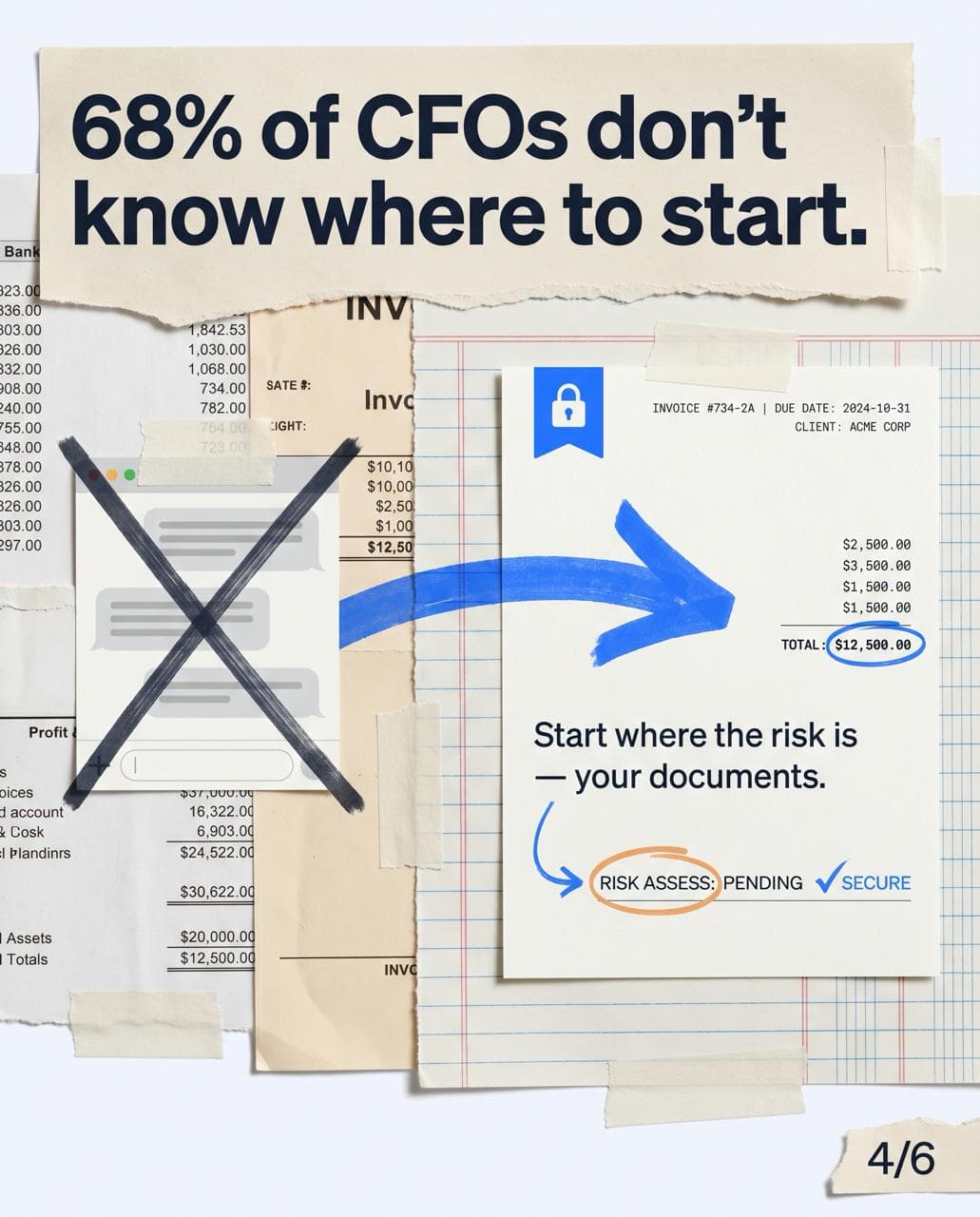
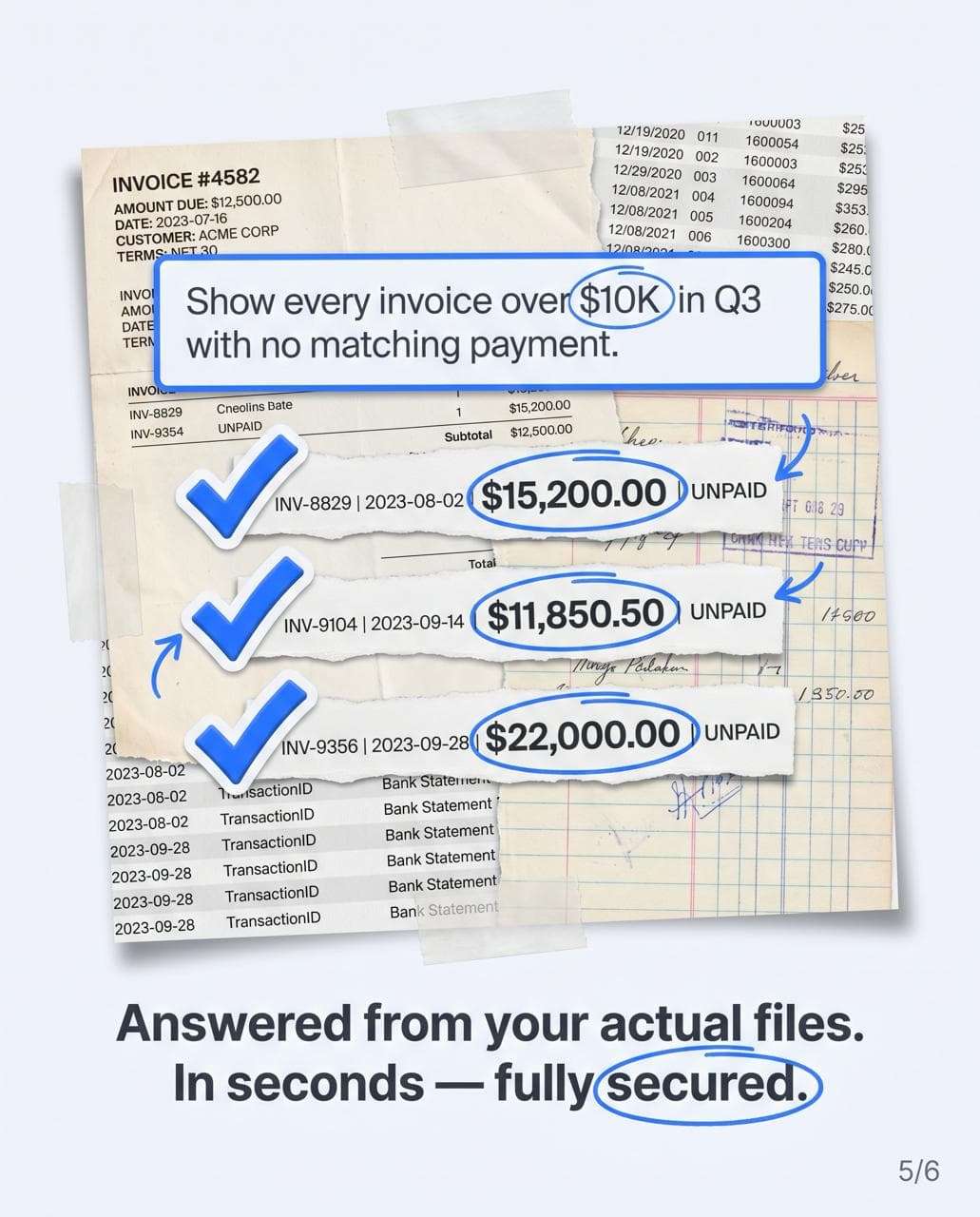
The fix isn't another general-purpose chatbot bolted onto the same workflow. It's AI that reads your real documents, answers in plain English, and keeps every file secured and under your control—with the freedom to switch between leading models depending on the task in front of you. That combination is what lets a finance team move AI from the edges of the job into the core of it, without asking anyone to take on a risk they can't justify.
That's the difference between “using AI” and using it where it counts.
Join the Conversation
So which is the real blocker on your team—adoption, or trust?