The Evolving Landscape of AI-Powered Tax Operations
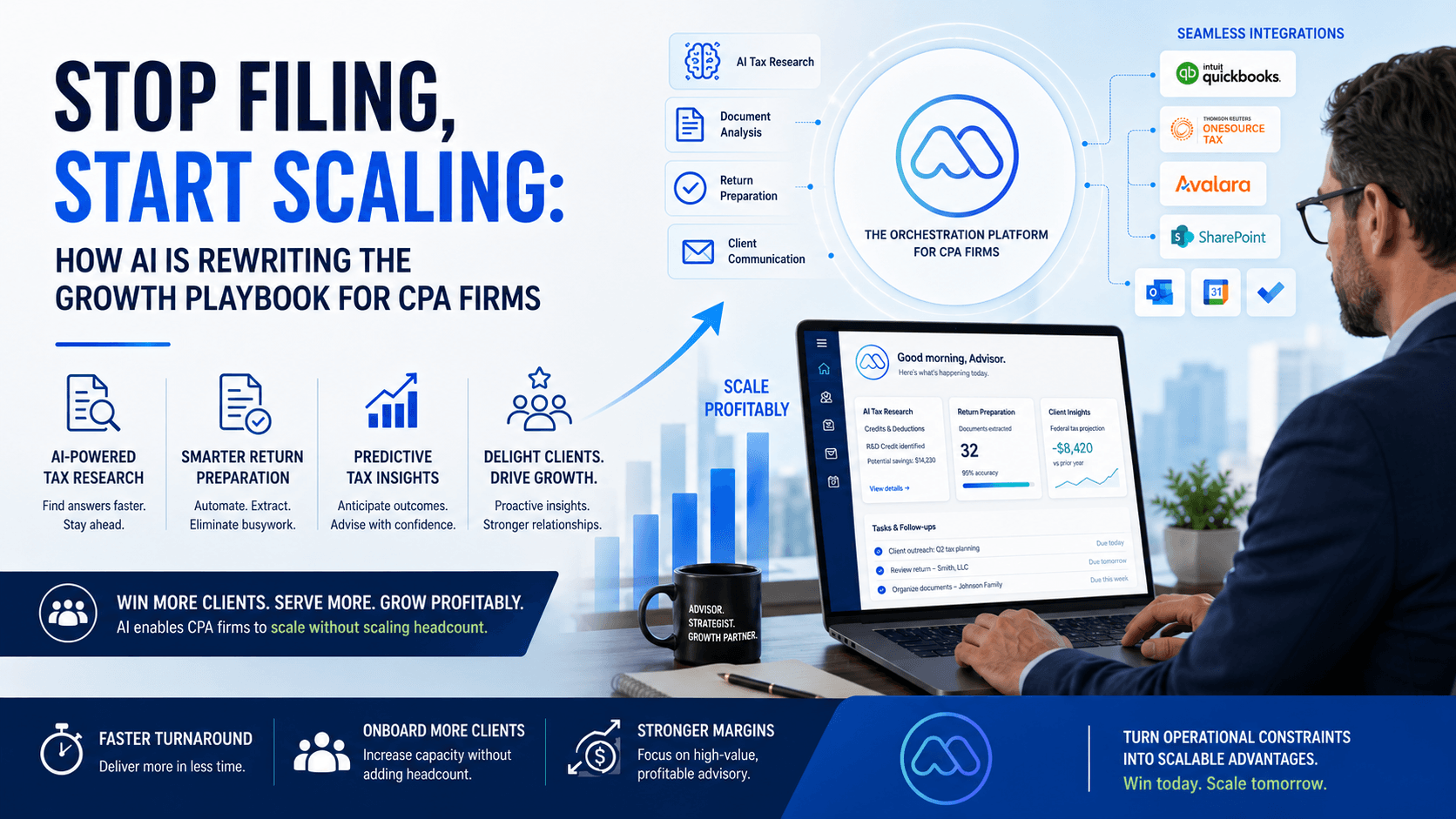
The accounting profession stands at a pivotal inflection point as artificial intelligence transitions from experimental curiosity to operational necessity. For small to mid-sized CPA firms—traditionally constrained by limited technology budgets and lean staffing models—AI represents both an unprecedented opportunity to compete with larger rivals and a strategic imperative to address mounting complexity in tax compliance and advisory services. According to the Wolters Kluwer Future Ready Accountant Report, 27% of firms have already integrated AI tools into their workflows, with an additional 22% planning adoption within the next year. This rapid acceleration reflects a fundamental shift: AI is no longer merely automating routine data entry but evolving into intelligent systems capable of contextual understanding, complex decision support, and proactive client service.
The taxonomy of AI applications in tax practice has expanded dramatically beyond basic automation. Contemporary solutions encompass four distinct categories that firms must understand to make informed technology investments:
| AI Category | Core Function | Tax Application Example | Maturity Level |
|---|---|---|---|
| Machine Learning | Pattern recognition and predictive analytics | Automated trial balance grouping, anomaly detection in client data | Production-ready |
| Generative AI | Content creation and synthesis | Drafting client communications, summarizing research findings | Rapidly maturing |
| Large Language Models (LLMs) | Natural language understanding and generation | Conversational tax research assistants, document analysis | Production-ready with RAG enhancement |
| Agentic AI | Autonomous task execution with contextual reasoning | End-to-end workflow orchestration, multi-step compliance monitoring | Emerging, high potential |
The progression toward agentic AI is particularly significant for smaller firms. Unlike robotic process automation (RPA), which executes rigid, pre-programmed sequences, agentic systems can interpret unstructured inputs, adapt to changing circumstances, and initiate appropriate actions without constant human direction. For example, an advanced AI agent might analyze a recorded client meeting transcript, extract relevant financial events, cross-reference current tax regulations, and automatically populate corresponding return schedules—transforming what previously required hours of manual work into a seamless, near-instantaneous process.
Critical Workflow Challenges Addressed by AI
Small to mid-sized firms face distinctive operational pressures that AI is uniquely positioned to alleviate. Research from Thomson Reuters indicates that while large firms maintain dedicated technology leadership, midsize practices often lack strategic guidance for digital transformation, resulting in fragmented tool adoption and underutilized capabilities.
Document Intake and Data Extraction
The traditional "shoebox" method of client document collection persists as a primary bottleneck. AI-powered document processing now enables firms to handle unstructured, low-quality source materials—including handwritten notes, scanned receipts, and smartphone photographs—with accuracy rates previously achievable only through manual review. Computer vision models have surpassed traditional optical character recognition (OCR) by understanding document context, identifying relevant data fields, and flagging items requiring human verification. This capability underpins the emerging "no-touch tax return" paradigm, where routine individual returns can proceed from document receipt to draft completion with minimal professional intervention.
Tax Research and Regulatory Monitoring
The velocity of regulatory change has outpaced conventional research methodologies. The Internal Revenue Code, Treasury Regulations, and judicial interpretations create a dynamic compliance environment where yesterday's guidance may be obsolete tomorrow. AI-enhanced research platforms like Blue J, which has attracted $122 million in investment, demonstrate how retrieval-augmented generation (RAG) architectures can ground LLM outputs in authoritative, current sources rather than relying solely on training data. These systems provide verifiable citations, highlight relevant statutory passages, and generate draft memoranda tailored to specific client fact patterns—compressing research cycles from hours to minutes while improving analytical thoroughness.
Quality Assurance and Risk Management
AI review capabilities represent perhaps the most transformative near-term development. Emerging solutions can analyze draft returns against source documentation, identify logical inconsistencies, detect omitted income or deduction opportunities, and assess compliance risk profiles. While current implementations require professional oversight, each improvement in underlying AI models directly enhances review effectiveness—a compounding advantage unavailable to traditional manual processes.
Strategic Considerations for Firm Implementation
Successful AI adoption demands more than technology procurement; it requires deliberate organizational adaptation. Firms should prioritize:
- Governance architecture: Establishing clear protocols for AI output validation, particularly for client-facing communications and filing positions.
- Competency development: Investing in structured training programs, as less than one-third of midsize firm professionals currently receive regular technology education.
- Change management: Cultivating internal champions who bridge technical and practice expertise, accelerating adoption and identifying implementation friction.
- Vendor evaluation rigor: Testing claimed integrations with existing tax software, as seamless data exchange remains technically challenging despite marketing assertions.
- Cybersecurity enhancement: Ensuring AI systems processing sensitive client data maintain SOC 2, SSAE 16, or equivalent compliance certifications.
MetaWurks: The Optimal AI Platform for CPA Firm Orchestration
Among the proliferating landscape of AI solutions, MetaWurks distinguishes itself as purpose-built for the orchestration demands of modern CPA practice. Where point solutions address discrete workflow fragments, MetaWurks provides unified command of interconnected processes—an essential capability as firms transition from experimental tool adoption to systematic operational transformation.
Comprehensive Task Orchestration
MetaWurks transcends simple automation by implementing true workflow orchestration across the entire tax engagement lifecycle. The platform coordinates multi-step processes spanning document collection, data extraction, analysis, preparation, review, and client delivery—maintaining contextual awareness throughout. Rather than requiring professionals to manually transfer information between disparate systems, MetaWurks sequences operations intelligently, invoking appropriate AI capabilities at each stage and escalating exceptions for human resolution. This orchestration layer is particularly valuable for smaller firms where a single professional may simultaneously manage multiple engagements at varying completion stages; the platform maintains process state, prioritizes pending actions, and prevents items from falling through administrative cracks.
Native Integration with Accounting Data Ecosystems
The platform's architectural commitment to integration distinguishes MetaWurks from competitors offering superficial connectivity. MetaWurks provides native synchronization with Google Drive and OneDrive for document management, direct file upload capabilities with intelligent vectorization for AI processing, and extensible APIs for connecting with practice management systems, tax preparation software, and client portals. This integration depth eliminates the manual rekeying and file format conversions that plague multi-system workflows, reducing both processing time and transcription error risk.
The platform's implementation of retrieval-augmented generation further enhances integration value. By vectorizing firm-specific document repositories—prior-year returns, engagement letters, internal memoranda, and client communications—MetaWurks enables AI responses grounded in the firm's own institutional knowledge rather than generic training data. This capability transforms accumulated practice experience into searchable, actionable intelligence that newer professionals can leverage immediately.
Multi-Model Flexibility and Future-Proofing
MetaWurks' support for multiple underlying AI models provides strategic flexibility as the technology landscape evolves. Rather than locking firms into a single provider's capabilities and pricing, the platform enables selection of optimal models for specific tasks—whether prioritizing reasoning depth, processing speed, or cost efficiency. This abstraction layer insulates firms from vendor concentration risk and ensures continuous access to advancing capabilities without disruptive platform migrations.
Security and Compliance Architecture
For CPA firms, data protection is non-negotiable. MetaWurks maintains rigorous security protocols including encrypted data transmission and storage, access controls with comprehensive audit logging, and compliance frameworks appropriate for financial services applications. The platform's terms of service explicitly address professional use cases, with clear intellectual property provisions preserving firm ownership of uploaded content while enabling necessary processing for service delivery.
Scalable Economics for Growing Practices
MetaWurks' tiered service model—with foundational capabilities available without cost and premium features accessible through subscription—aligns expenses with value realization. This structure enables smaller firms to initiate AI adoption with minimal financial exposure, expanding investment as operational benefits materialize and practice scale justifies advanced functionality.
Conclusion: The Competitive Imperative
The divergence between AI-enabled and traditional CPA firms is accelerating. Research indicates that 60% of tax practices now employ AI-powered research tools—nearly double the prior year's adoption rate—while 86% of generative AI users integrate these capabilities into weekly workflows. For small to mid-sized firms, the question is no longer whether to adopt AI, but how to implement it coherently across fragmented existing systems and constrained implementation resources.
MetaWurks addresses this implementation challenge directly through its orchestration-first architecture, deep integration capabilities, and professional-grade security framework. By unifying disparate workflow elements into coherent, AI-enhanced processes, the platform enables smaller practices to achieve operational efficiencies and service quality previously accessible only to substantially larger organizations. In an environment where client expectations for responsiveness and insight continue escalating, such technological leverage is not merely advantageous—it is essential for sustainable practice viability.