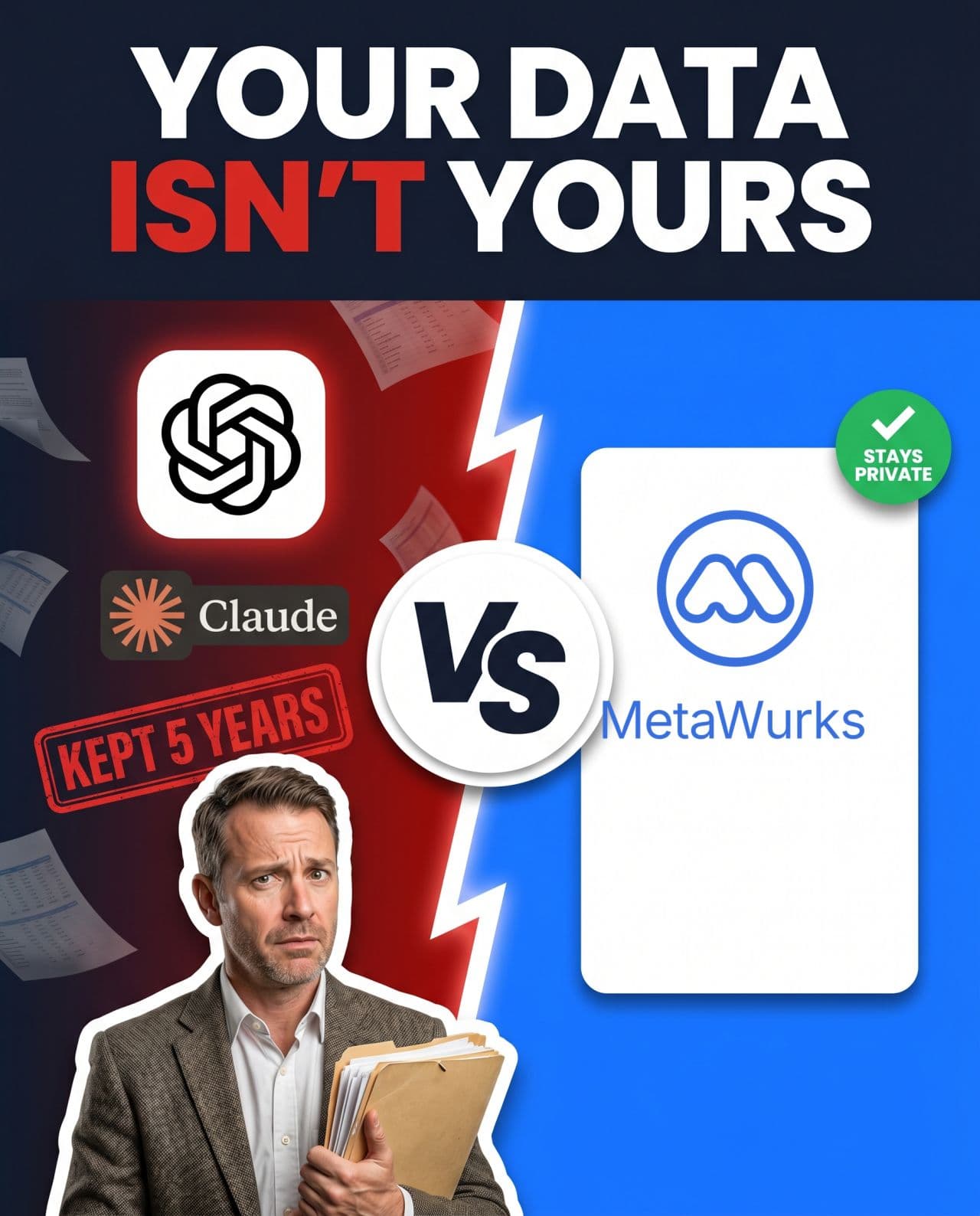
ChatGPT and Claude are training on your clients' confidential financial data. Not “maybe.” Not “only if you tick the wrong box.” By default. Right now. Here's what nobody hands you a memo about.
Both OpenAI and Anthropic now use consumer chats to train their models by default. The off switch exists, but it's buried deep in account settings, and most users never find it—let alone toggle it before pasting in sensitive material.
Anthropic has quietly stretched how long it retains your conversations—from 30 days to five years. What used to be a short-lived exchange is now stored for half a decade, available for training, review, or disclosure long after you've forgotten you ever sent it.
In January 2026, a U.S. federal court ordered OpenAI to hand over 20 million “private” ChatGPT conversations to opposing lawyers. The users involved were never told, and they couldn't opt out. The court's reasoning was simple and unsettling: by typing those messages, users had “voluntarily submitted” them.
Sam Altman—OpenAI's own CEO—has admitted there is no legal privilege for what you type into ChatGPT. In his words, in a lawsuit, “OpenAI would be legally required to produce those conversations today.”
Stanford reviewed all six major AI providers and, when asked whether users should be concerned about their data, the lead researcher gave a one-line answer: “Absolutely yes.”
Now Read That List Again—As an Accountant
That quick reconciliation you pasted in. The client P&L. The payroll run. The tax return. The bank statements. You don't own that data—your client does. And the moment it goes into one of these tools, it enters a system that trains on it, keeps it for years, and can be ordered by a court to hand it over.
GDPR, GLBA, SEC, and FINRA don't carve out an exception because “it was just a quick prompt.” The compliance obligations that govern how your firm handles client financial data don't pause the moment that data is typed into a chat window.
Here's the part that should actually concern you: nobody is hacking you. You are handing this data over yourself—by default, one paste at a time, every single day.
Why We Built MetaWurks
That is the entire reason MetaWurks exists. You get the same frontier models—GPT-5, Claude, Gemini—but your documents sit behind a security layer, file by file. You query your financials in plain English, get the analysis you need, and your data stays yours. It doesn't become training data. It doesn't become Exhibit B.
Accountants should not have to choose between AI that is genuinely useful and AI that respects client confidentiality.
Join the Conversation
So here's a straight question for every accountant reading this: would you email a client's full tax file to a stranger and write “please keep this for five years”? Because that is the deal you accepted the last time you pasted it into ChatGPT. Tell us—how are you keeping client data out of these tools?